Some technology deployments do more than solve the problem they were installed to solve. At Bulyard Shipbuilding Industry – the largest shipbuilding and ship repair enterprise in Bulgaria by production volume – a UtilTex remote water monitoring system delivered something beyond leak detection and cost savings: it gave the maintenance team data good enough to redesign how they work. Bulyard reorganized their entire maintenance process around the platform.
The Challenge: Infrastructure Spread Across a Complex Industrial Site
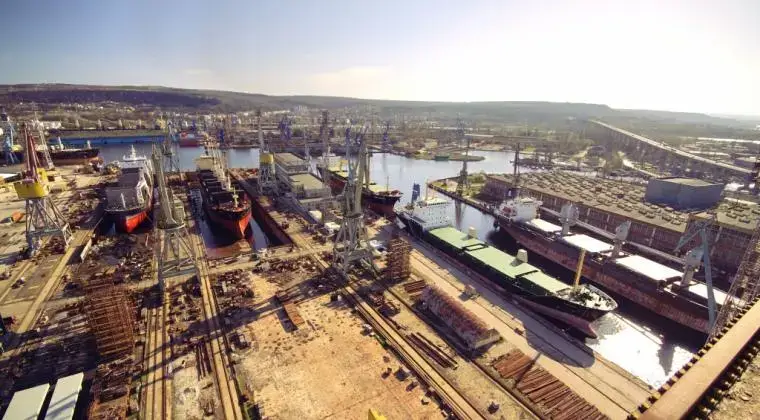
A shipyard operates on a fundamentally different scale from a typical facility. Bulyard manages an extensive site with quays, dry docks, fabrication halls, workshops, and support infrastructure spread across a large area. The water distribution network serving this footprint is correspondingly complex – multiple supply points, long pipe runs, and numerous branch connections to industrial processes, workshops, and amenities.
With no real-time monitoring, infrastructure faults were invisible until they became large. Leaks ran undetected for weeks. Abnormal consumption appeared only in monthly utility invoices. The maintenance team could not know where to look without walking the entire network – and by the time they found a fault, significant water and cost had already been lost.
Segmented IoT Monitoring: Fault Isolation at Zone Level
UtilTex implemented a ThingsLog IoT water monitoring architecture that divides the Bulyard distribution network into independently metered zones. This segmentation is the operational key to the system. When consumption anomalies appear, they are immediately localised to a specific zone – maintenance teams know exactly which section of the network requires inspection without traversing the entire site.
The monitoring capabilities span the full range of water infrastructure fault types:
- Night-time and off-shift flow: consumption during periods when no processes are running is the clearest indicator of pipe leaks or open valves – the system flags these within hours of occurrence
- Zone consumption trends: gradual increases over days or weeks reveal slow leaks and infrastructure degradation building before it becomes acute
- Consumption spikes: sudden increases in a zone indicate burst pipes, failed joints, or equipment faults requiring immediate response
- Cross-zone comparison: comparing consumption patterns across similar zones quickly surfaces outliers that warrant investigation
From a Monitoring Tool to a Maintenance Operating System
What distinguishes the Bulyard deployment is what happened after the system was installed. The maintenance team did not simply respond to individual alerts – they used the data to fundamentally restructure how maintenance at the shipyard is organized. Patrol rounds, inspection priorities, and response protocols were all redesigned around the real-time intelligence the platform provides.
Rather than time-based inspection rounds that covered the entire network on a fixed schedule regardless of actual conditions, the team now operates condition-based maintenance: attention goes where the data indicates it is needed, when it is needed. Zones that show stable, expected consumption are not inspected until a signal warrants it. Zones showing anomalies receive immediate attention. The platform effectively acts as the maintenance dispatch system.
Automated utility reporting to the water supply authority – previously a manual, time-consuming task – is now generated directly from the platform, eliminating administrative overhead and ensuring accuracy.
“Since we introduced the Remote Water Consumption Monitoring solution, we have considerably reduced water waste and improved our ability to respond to infrastructure issues across the entire site.”
– Bulyard Shipbuilding Industry
Results
- Entire maintenance process reorganized around real-time IoT data – from reactive rounds to condition-based operations
- Water leaks and infrastructure faults detected within hours of occurrence rather than weeks
- Fault location immediately identified at zone level – no full-site inspections required
- Significant reduction in water loss and associated utility costs
- Automated utility reporting replacing manual meter reading and data compilation
- Platform architecture ready to extend to electricity monitoring for complete site coverage
This case study is powered by UtilTex using ThingsLog IoT monitoring technology.